Under the Patronage of the Ministry of Energy, the 13th Saudi Smart Grid Conference Opens in Riyadh Under the Theme “Innovation Today for a Sustainable Tomorrow.”
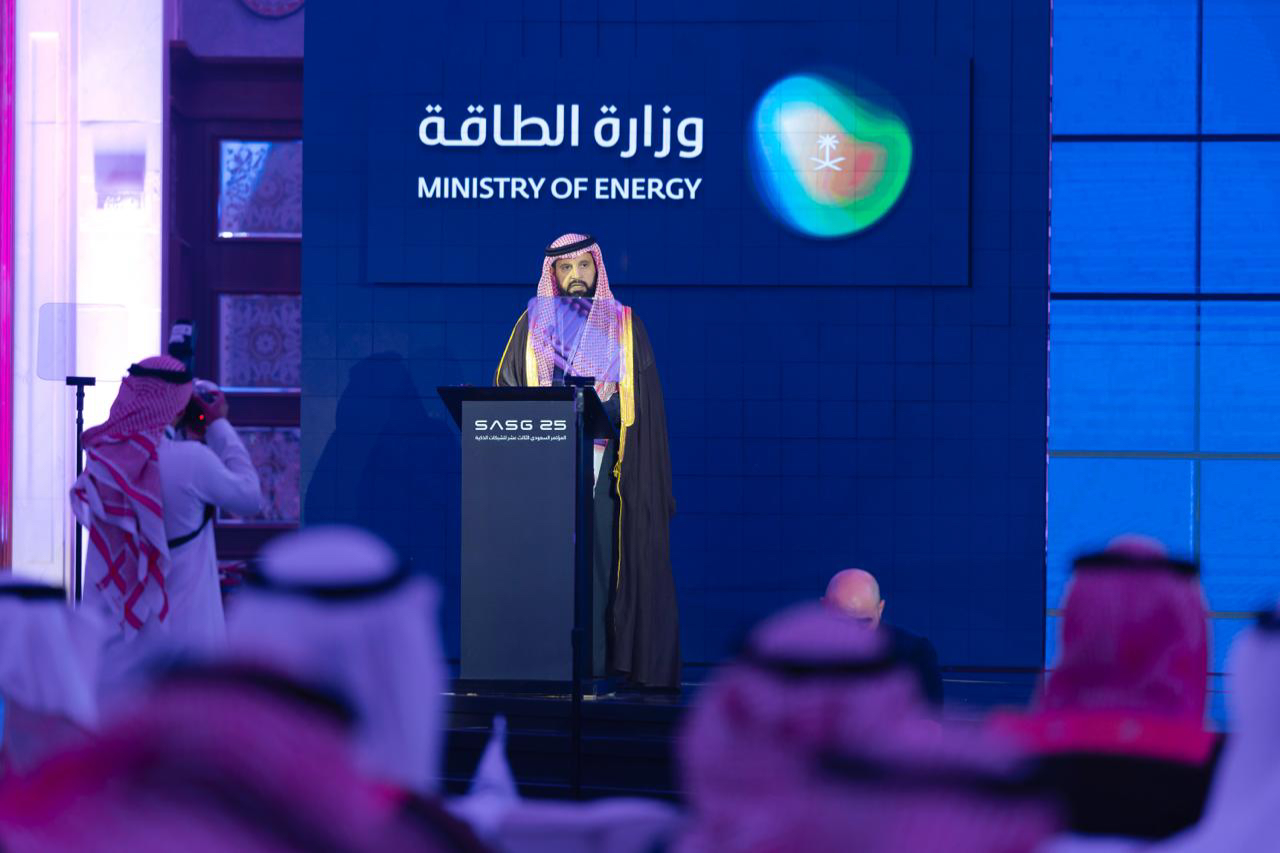
Under the patronage of the Ministry of Energy, the 13th Saudi Smart Grid Conference (SASG 2025), and its accompanying exhibition, opened today in Riyadh under the theme “Innovation Today for a Sustainable Tomorrow.” The three-day conference brings together experts and specialists from 25 countries and features 28 panel discussions and technical sessions presenting 225 scientific papers on global advancements in smart grid systems.
In his opening address, Assistant Minister of Energy for Electricity Affairs, Eng. Nasser Al-Qahtani, highlighted the continued support extended to the energy sector by the Kingdom’s leadership. He commended the Minister of Energy’s support forconvening and sponsoring the conference, noting its importance in advancing dialogue on smart grid technologies. “Smart grid technologies are a cornerstone of the global energy transition,” Al-Qahtani said. “They enable improvements across electricity generation, transmission, and distribution, while strengthening grid security and reliability.”
The assistant minister explained that, in line with Saudi Vision 2030, the Ministry of Energy is advancing long-term planning to optimize the use of the Kingdom’s diverse energy resources, with the aim of strengthening grid security and resilience and improving generation efficiency. These efforts, he noted, reinforce Saudi Arabia’s leadership in this vital sector, position the Kingdom as a global hub for electricity interconnection and renewable power exports, and support the development of a regional electricity trading market, an optimal energy mix, and national emissions-reduction targets.
Al-Qahtani added that the Kingdom’s electricity sector has undergone significant transformation in recent years, including major upgrades to grid infrastructure to enhance readiness for renewable energy integration and energy-storage systems.
“Smart grids are a fundamental component of electricity sector development,” he said. “They enhance incident response, accelerate system recovery, and improveservice reliability by analyzing smart-meter data through the use of artificial intelligence to support proactive, data-driven decision-making.”
He noted that distribution network automation in the Kingdom reached approximately 40 percent by the end of 2025, an optimal level in line with international best practices in terms of return on investment. He also highlighted the development of renewable power projects with a combined capacity of nearly 64 gigawatts, of which 12.3 gigawatts have already been connected to the national grid. Additionally, battery energy-storage systems with a total capacity of 30 gigawatt-hours are under development, with 8 gigawatt-hours already grid-connected. These projects, he said, play a critical role in enabling the grid to balance real-time fluctuations between supply and demand resulting from the variable nature of renewable energy sources.
The opening ceremony included the recognition of the Energy Hackathon winners, the exchange of agreements, and the inauguration of the accompanying exhibition. The conference provides a global platform for sharing expertise and forging partnerships in smart grids and the digital economy, and convenes international experts, decision-makers, researchers, and specialists.
Discussions address key challenges and opportunities across the power sector, renewable energy, regulation and the future of smart grids, with emphasis on technology localisation, capacity building and technical partnerships to strengthen smart infrastructure and support a sustainable, investment-friendly and innovation-enabling energy ecosystem.
The conference also explores the integration of renewable energy sources, the latest developments in electricity storage solutions and smart load-management systems, as well as the role of cybersecurity in protecting energy infrastructure and strengthening system reliability.
